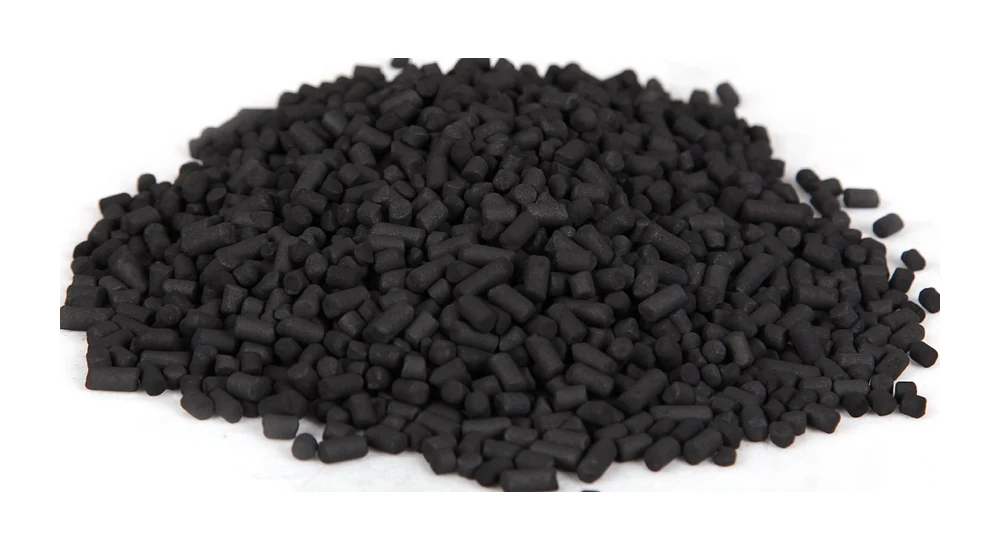
PL coal-based columnar carbon is made by Qunli from selected anthracite: crushed, milled, re-formed with a binder and activated with high-temperature steam. With a mainly microporous structure, it adsorbs hydrocarbons and benzene vapours well and suits fixed-bed gas-phase adsorption.
Product features
Anthracite is high in carbon and low in volatiles; after activation it develops micropores with good mechanical strength, steadily carrying the benzene, toluene and xylene load in organic exhaust treatment. Columnar forming keeps the bed permeable, so pressure drop changes little as airflow fluctuates, which suits adsorption concentration and catalytic oxidation systems. Compared with coconut shell columnar carbon, coal-based columnar carbon is cheaper and suits the large fill volumes of exhaust treatment plants.
Product specifications
| Project | Notes |
|---|---|
| Raw material | Selected anthracite |
| Manufacturing process | Crushing and milling - binder forming - high-temperature steam activation |
| Product form | Cylindrical granules |
| Standard specifications | Diameter 4 mm / 5 mm / 8 mm, length adjustable |
| Testing performed | GB / JIS / ASTM, with the method chosen to suit your requirements |
| Packaging | 25 kg woven bags / 500 kg bulk bags, or as required |
| Production site | Yihuang Industrial Zone, Fuzhou, Jiangxi |
CTC adsorption, iodine value and strength of columnar carbon vary with anthracite type and activation degree; ask a sales engineer for the current batch test report.
Available specifications
Applications
PL coal-based columnar carbon is used in these gas treatment conditions:
- Organic exhaust gas control in coating and printing
- Adsorption of benzene, toluene and xylene
- VOC adsorption concentrator systems
- Oil vapour recovery and tank breathing gas treatment
- Air separation nitrogen and gas refining
Test notes
- Results are analysed to GB, JIS and ASTM standards;
- Specific surface area measured by the BET method;
- Test results are average values for the same batch.
PL coal-based columnar activated carbon FAQ
Benzene molecules are small and are adsorbed mainly in micropores, which coal-based columnar carbon has in abundance. Exhaust treatment plants also run high air volumes with large beds, where the uniform shape keeps pressure drop low and stable, and the cost suits large fills better than coconut shell carbon.
It depends on exhaust concentration, air volume, carbon fill and emission limits. Engineers commonly use the breakthrough curve: schedule replacement or regeneration when outlet concentration reaches 70%-80% of the limit. For high concentrations, add pre-treatment (dehumidifying, dedusting, cooling) upstream to extend carbon life.
Steam regeneration and hot nitrogen regeneration are common; desorbed organics can be condensed and recovered. Each cycle causes losses and lowers capacity, so decide on regeneration by comparing fresh carbon cost, hazardous waste disposal cost and downtime losses.
Yes, but humidity significantly reduces adsorption efficiency. Water molecules compete with organics for adsorption sites, and at high humidity the bed can become wetted. Keep inlet relative humidity below 60% and use a condenser before the bed if needed.
Related products
Need a quote or sample of PL coal-based columnar carbon?
Send us your medium, operating data and volume; a sales engineer will reply within 24 hours.