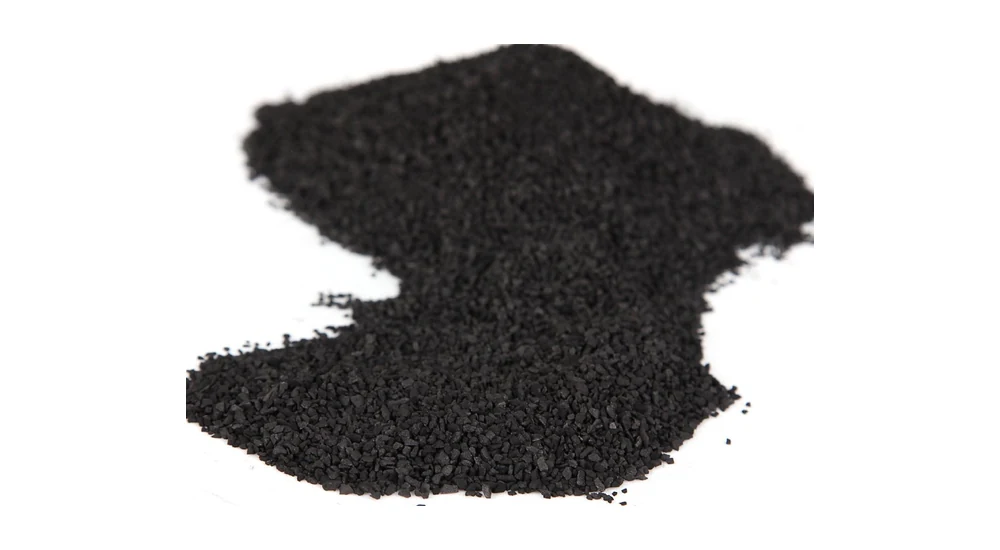
DCS coal-based granular carbon is made by Qunli from selected bituminous coal by carbonisation and steam activation. With a high mesopore fraction and strong decolourisation, it purifies and decolourises pharmaceuticals, sugar liquor and chemicals, and also suits continuous fixed-bed refining.
Product features
Decolourisation relies on mesopores capturing pigment molecules, not micropores adsorbing small gas molecules, so this grade is designed for mesopore development. Steam activation of coal gives clean pore walls and controlled ash, suiting direct contact with the material. Granules run continuously in fixed beds and are easy to backwash and regenerate, removing the filtration step powdered carbon needs.
Product specifications
| Project | Notes |
|---|---|
| Raw material | Selected bituminous coal |
| Manufacturing process | Carbonisation - steam activation - screening |
| Product form | Irregular granules |
| Standard specifications | 8x20 mesh / 12x30 mesh / 12x40 mesh / 20x40 mesh |
| Testing performed | GB / JIS / ASTM, with the method chosen to suit your requirements |
| Packaging | 25 kg woven bags / 500 kg bulk bags, or as required |
| Production site | Yihuang Industrial Zone, Fuzhou, Jiangxi |
Decolourisation depends on the material system, contact time and temperature. Ask a sales engineer for this grade's iodine and methylene blue values; small samples are available for machine trials.
Applications
DCS coal-based granular carbon mainly serves refining and decolourisation steps:
- Decolourisation of APIs and intermediates
- Sugar liquor and syrup decolourisation
- Chemical purification and odour removal
- MSG, citric acid and fermentation broth refining
- Edible oil and food additive decolourisation
Test notes
- Results are analysed to GB, JIS and ASTM standards;
- Specific surface area measured by the BET method;
- Test results are average values for the same batch.
DCS coal-based granular activated carbon FAQ
Powdered carbon has a large contact area, adsorbs fast and is dosed in one step, suiting batch decolourisation, but must then be filtered out and cannot be recovered. Granular carbon runs continuously in a fixed bed with simple operation and no filtration step, suiting continuous lines. Small, varied batches favour powder; steady large-scale production favours granules.
Four common causes: insufficient contact time, too low a dosage, material temperature or pH outside the workable range, and carbon nearing saturation. Pigment molecules also vary widely in size between sources and need a matching pore size distribution. Run a small-sample dosage gradient test before fixing process parameters.
Yes. Give us the basics of the material (type, colour, pH, temperature, throughput) and we will send samples of the matching grade so you can verify dosage and contact time in the lab or on the line before fixing the purchase specification.
Spent carbon loaded with organics (especially pharmaceutical or food materials) is normally managed as solid waste and should be handed to a licensed contractor, not burned or landfilled on site. If the composition is simple and the calorific value suitable, regeneration or use as fuel can be assessed, subject to local environmental rules.
Related products
Need a quote or sample of DCS coal-based granular carbon?
Send us your medium, operating data and volume; a sales engineer will reply within 24 hours.