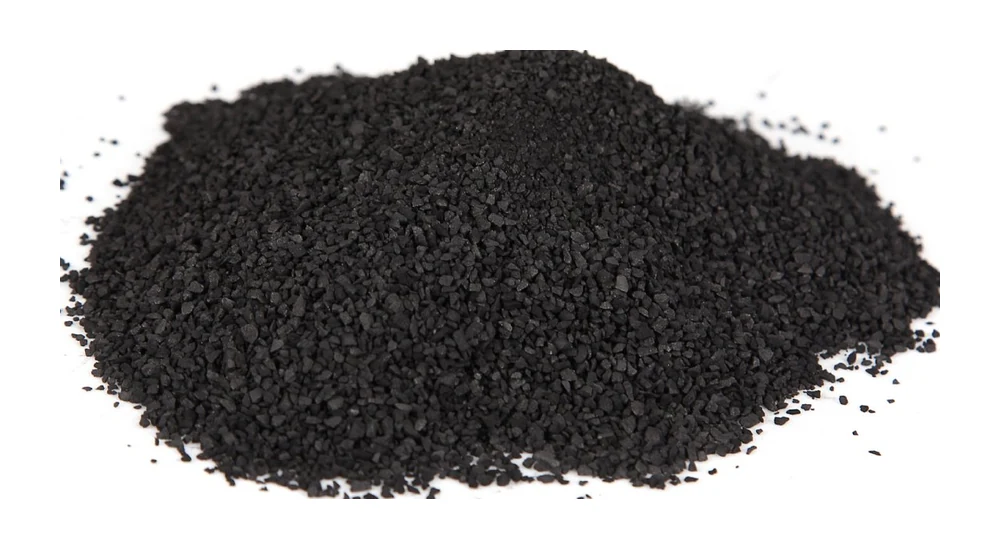
GAC coal-based granular carbon is an irregular granular carbon made by Qunli from selected bituminous coal by carbonisation and steam activation. With both mesopores and micropores and a broad adsorption spectrum, it is used for advanced drinking water purification, ultrapure water pre-treatment, food and beverage process water and industrial effluent polishing.
Product features
Coal-based carbon has a wider pore size distribution than coconut shell carbon, with a substantial mesopore fraction alongside micropores, so it removes large organics, colour and odour well together - the highest-volume grade in municipal and industrial water treatment. Qunli uses steam physical activation with no chemical residue; the granules are screened and air-classified for low fines, so rinse water turbidity falls quickly after filling.
Product specifications
| Project | Notes |
|---|---|
| Raw material | Selected bituminous coal |
| Manufacturing process | Carbonisation - steam activation - screening |
| Product form | Irregular granules |
| Standard specifications | 8x20 mesh / 8x30 mesh / 12x40 mesh / 20x40 mesh |
| Testing performed | GB / JIS / ASTM, with the method chosen to suit your requirements |
| Packaging | 25 kg woven bags / 500 kg bulk bags, or as required |
| Production site | Yihuang Industrial Zone, Fuzhou, Jiangxi |
Iodine value, methylene blue value, strength and bulk density of coal granules vary with coal type and activation degree; ask a sales engineer for the current batch test report.
Applications
Typical applications of GAC coal-based granular carbon:
- Advanced purification and upgrading of municipal water
- Ultrapure water system pre-treatment
- Process water purification for food and beverages
- Advanced treatment of industrial wastewater and reuse water
- Sewage effluent upgrading and odour control
Test notes
- Results are analysed to GB, JIS and ASTM standards;
- Specific surface area measured by the BET method;
- Test results are average values for the same batch.
GAC coal-based granular activated carbon FAQ
Consider the size of the target molecules and the water quality requirements. Coconut shell carbon is mainly microporous, low in ash and high in purity, suiting low-molecular-weight organics and food grade / water sanitation duties where purity matters. Coal-based carbon has more mesopores, a broader adsorption spectrum and lower cost per volume, suiting water with colour, odour and large organics together - the mainstream choice for municipal and industrial treatment.
Carbon for drinking water must control ash, heavy metal leaching and organic shedding into rinse water. Qunli uses steam physical activation, leaving no chemical activator residue. Test reports can be supplied, and the bed should be rinsed to clear, in-spec effluent before service.
There is no fixed interval; it depends on inlet organic load, empty bed contact time and effluent targets. Engineers normally use COD, UV254 or odour threshold breakthrough as the change-out criterion, or periodically test iodine value decay. Saturated carbon can be thermally regenerated by a specialist, though capacity declines over successive cycles.
Yes. Granular carbon is supplied by mesh size; bed volume and weight are calculated from filter area and design bed depth. Send us the filter dimensions, design rate and effluent targets for a loading and grade recommendation.
Related products
Need a quote or sample of GAC coal-based granular carbon?
Send us your medium, operating data and volume; a sales engineer will reply within 24 hours.