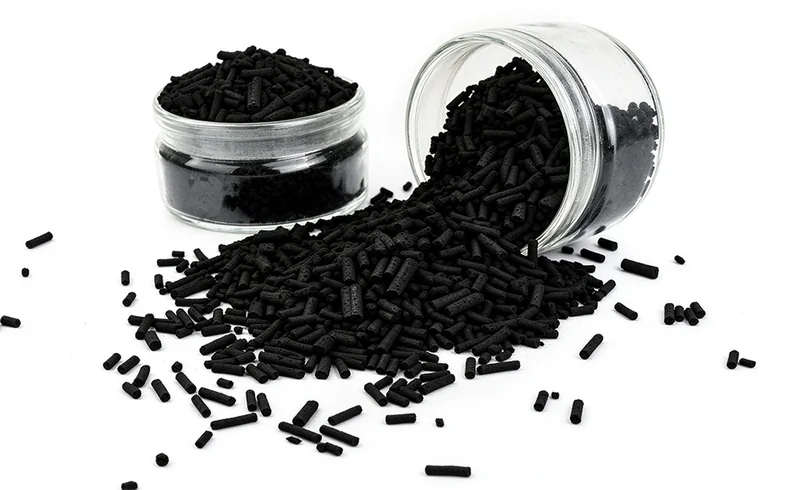
PLC coconut shell columnar carbon is made by Qunli from carbonised coconut shell: milled, blended with binder, extruded under high pressure, then carbonised and steam activated. High strength, low ash and a concentrated pore size distribution suit continuous fixed-bed gas adsorption and liquid-phase duties.
Product features
Columnar forming gives the carbon a uniform shape and high mechanical strength, so it resists powdering through repeated adsorption-regeneration cycles and gas scouring, keeping bed pressure drop stable. Coconut shell is naturally low in ash with developed micropores, capturing low-concentration organic vapours well. Qunli can adjust column diameter and length to your tower diameter, bed depth and gas velocity, reducing on-site screening losses and packing gaps.
Product specifications
| Project | Notes |
|---|---|
| Raw material | Carbonised coconut shell |
| Manufacturing process | Milling and blending - binder extrusion - carbonisation - steam activation |
| Product form | Cylindrical granules |
| Standard specifications | Diameter 4 mm / 5 mm / 8 mm, length adjustable |
| Testing performed | GB / JIS / ASTM, with the method chosen to suit your requirements |
| Packaging | 25 kg woven bags / 500 kg bulk bags, or as required |
| Production site | Yihuang Industrial Zone, Fuzhou, Jiangxi |
Iodine value, strength and bulk density of columnar carbon vary with the coconut shell batch and activation degree; ask a sales engineer for the current batch test report.
Available specifications
Applications
PLC coconut shell columnar carbon is used where an ordered bed and low resistance are needed:
- Organic solvent recovery (toluene, xylene, ethyl acetate, etc.)
- Industrial VOC purification and vapour recovery
- Air purifiers and cartridge filling
- Fixed-bed filtration of drinking and process water
- Biogas and natural gas desulfurisation pre-treatment
Test notes
- Results are analysed to GB, JIS and ASTM standards;
- Specific surface area measured by the BET method;
- Test results are average values for the same batch.
PLC coconut shell columnar activated carbon FAQ
The forming method differs. Columnar carbon is milled carbonised material re-extruded with a binder into cylinders; granular carbon is crushed and screened directly into irregular grains. Columns are uniform, with more stable bed pressure drop and usually higher strength, suiting continuous fixed beds; granules pack slightly less densely and cost less per volume, suiting frequent change-outs.
Columnar carbon in a tower withstands long-term gas scouring, water pressure and the thermal cycling of repeated regeneration. Weak carbon keeps generating fines, which raise bed pressure drop and affect airflow, and are carried into downstream equipment. High-strength columnar carbon extends change-out intervals and cuts downtime for screening.
Yes. Standard column diameters are 4 mm, 5 mm and 8 mm, with length adjustable during forming. Smaller columns give more external surface per volume and faster adsorption but higher pressure drop; larger ones lower pressure drop and suit high air volumes. Send us the tower diameter and design airflow for a matching specification.
Three things: the concentration and nature of the medium, the allowable pressure drop of the equipment, and the regeneration method. Choose a larger diameter for gas-phase adsorption, high air volumes and low pressure drop; a smaller one for liquid-phase duties or fast equilibrium. If unsure, send us the operating data for engineer support.
Related products
Need a quote or sample of PLC coconut shell columnar carbon?
Send us your medium, operating data and volume; a sales engineer will reply within 24 hours.