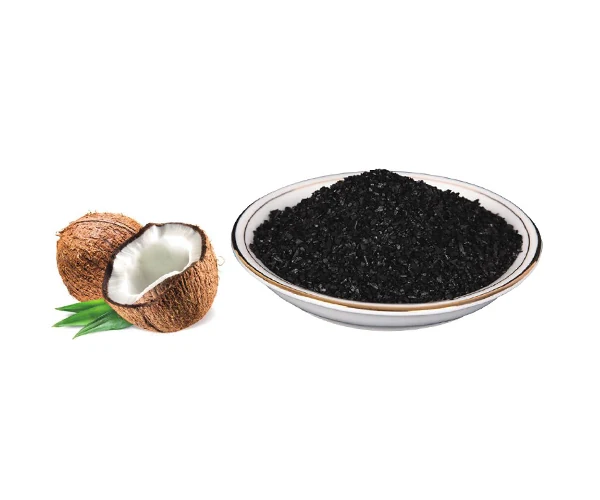
Food grade activated carbon meets food processing and water sanitation requirements and can be used for food decolourisation, beverages and drinking water; the producer must hold a Food Production Licence. Key quality indicators are iodine value, methylene blue value, ash, moisture and strength - all explained here with buying guidance.
Common applications of food grade activated carbon
Food grade activated carbon is widely used for: decolourising white sugar and glucose syrup; edible oil decolourisation and purification; decolourising and deodorising wine and beverages; process water for beer and beverages; and food industry water purification. Qunli, for example, produces 60 t/day of food grade carbon in both granular and powdered forms.
Iodine value: the first indicator of micropore adsorption capacity
Iodine adsorption value (iodine value, mg/g) reflects how developed the micropores are and is the most common quality indicator in liquid-phase adsorption. Generally, a higher iodine value means more micropores and greater capacity for small organic molecules. Quality acid-washed coconut shell carbon can reach 1000-1500 mg/g, while coal-based granular carbon is typically above 900-1000 mg/g.
Note that a higher iodine value is not automatically better; judge it together with strength and ash. Over-activated products may have high iodine but lower strength and higher attrition, generating fines that block pipework.
Methylene blue value: the key to decolourisation
Methylene blue adsorption value (mg/g) measures adsorption of medium-molecular-weight organics and correlates directly with decolourisation. In sugar decolourisation and edible oil refining it is a core selection indicator: powdered carbon is usually required above 200-250 mg/g, granular carbon 135-250 mg/g depending on the process.
Ash, moisture and strength: the basis of consistency
Ash is the proportion of inorganic residue in carbon; high ash contaminates the product, so food grade applications generally require acid washing to reduce it. High moisture means less effective carbon and is normally kept below 10%. Strength (abrasion resistance) governs granular carbon life under repeated washing and back-blowing; quality coconut shell and coal columnar carbons should exceed 95%.
Three tips for buying food grade activated carbon
- Check certificates: Confirm the manufacturer holds a Food Production Licence and ISO 9001 certification;
- Check specifications: Choose the indicator set for the application - methylene blue for decolourisation, iodine for odour and purification, plus strength and bulk density for dynamic beds;
- Verify: Ask suppliers for GB / JIS / ASTM test reports and run a small machine trial before placing a bulk order.
Related questions
Food grade activated carbon must meet national food additive / water sanitation standards, with tighter limits on arsenic, lead and heavy metals, and the producer must hold a Food Production Licence. Jiangxi Qunli Activated Carbon Co., Ltd. is a licensed specialist food grade and water sanitation grade carbon factory.
Iodine value reflects micropore volume and is an important but not the only indicator. Decolourisation also needs methylene blue value and gas-phase protection needs CTC value, together with strength, ash and bulk density for a balanced choice.
Related reading
Need help selecting food grade activated carbon?
Send us your process and targets for test reports and free samples.