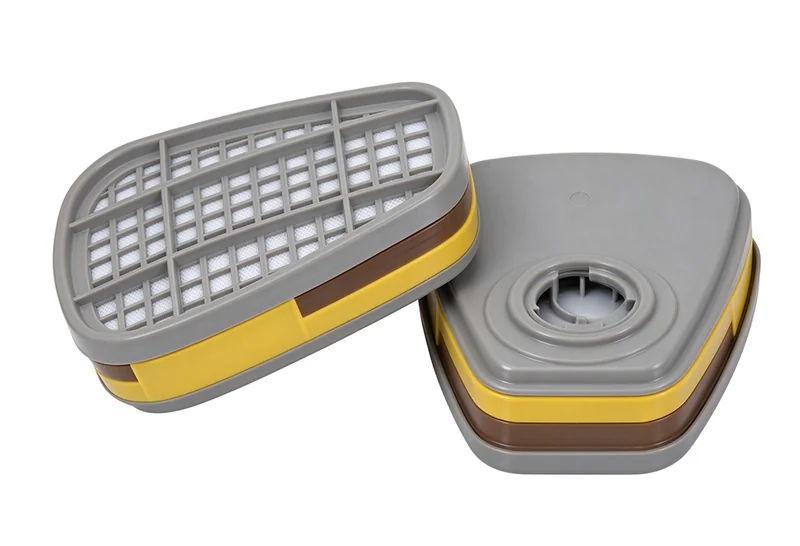
Type AE protective carbon is an impregnated carbon made by Qunli from coconut shell carbon by alkaline solution loading and calcination. It removes chlorine, HCl gas, SO2, HF and low-concentration H2S, and is mainly used to fill gas mask cartridges and industrial filter boxes.
Product features
Small, strongly polar acid gas molecules cannot be held for long by physical adsorption alone; an impregnant must neutralise them into solid salts fixed in the pores. Type AE uses an alkaline loading system that reacts quickly with chlorine, HCl, SO2 and HF, keeping protection time long even at low concentrations. Loading level and distribution uniformity directly determine performance, while calcination fixes the impregnant firmly in place.
Product specifications
| Project | Notes |
|---|---|
| Base material | Coconut shell activated carbon |
| Impregnation process | Alkaline loading and calcination |
| Protection target | Chlorine, HCl gas, SO2, HF and low-concentration H2S and other acid gases |
| Product form | Granular (sieved to equipment requirements) |
| Standard specifications | Mesh size set by cartridge / filter box design |
| Test methods | Protection time and resistance tested to your equipment standard |
| Packaging | Sealed moisture-proof packaging keeps impregnants dry |
| Production site | Yihuang Industrial Zone, Fuzhou, Jiangxi |
Protection time depends on impregnation level, bed depth, gas concentration and relative humidity and must be tested to your equipment standard. Moisture reduces performance, so reseal promptly after storage and opening.
Available specifications
Applications
Type AE protective carbon is used in these acid gas scenarios:
- Acid gas protection in chemical production
- Respiratory protection in chlor-alkali, agrochemical and pharma plants
- Emergency response to SO2 and HCl leaks
- Acid mist protection in pickling and plating
- H2S protection in sewage and septic tank work
Test notes
- Results are analysed to GB, JIS and ASTM standards;
- Specific surface area measured by the BET method;
- Test results are average values for the same batch.
Type AE protective carbon FAQ
It is chemistry, not physical adsorption. Acid gases such as chlorine, HCl and SO2 react with the alkaline impregnant inside the pores to form solid salts fixed in the carbon. Capacity is therefore far above pure physical adsorption and remains effective at low concentrations.
Performance falls markedly. Water occupies pores, dilutes impregnants and can cause caking and higher resistance. Store impregnated carbon sealed and dry, and use it promptly once opened. A cartridge that has been opened or used, even briefly, should not be resealed for later use.
Where only acid gases are present, Type AE is more targeted and cheaper. Where contaminants are unknown or organic vapours and ammonia coexist, choose ABEK multi-gas protection or configure to the highest risk level. Where personal safety is involved, prefer the wider protection range.
Normally stated by the manufacturer as a number of years from the production date, provided the cartridge is unopened and stored cool and dry. Past its expiry or once opened, protection cannot be guaranteed and it should be replaced.
Related products
Need a quote or sample of Type AE protective carbon?
Send us your medium, operating data and volume; a sales engineer will reply within 24 hours.