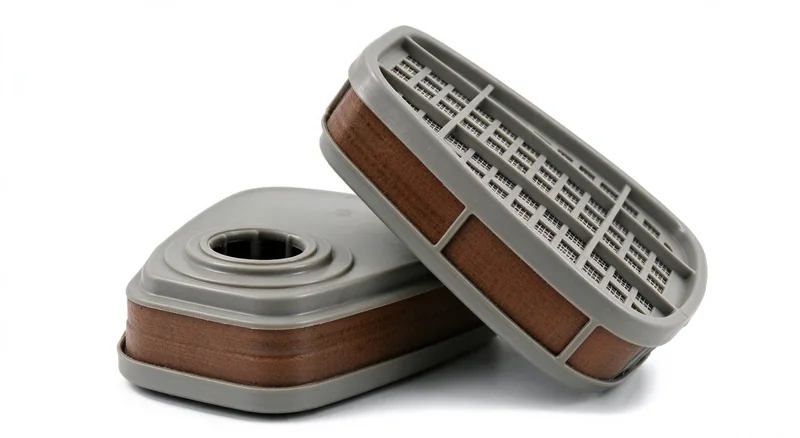
Type A protective carbon is a coconut shell based protective carbon made by Qunli with good adsorption of benzene and homologues, petrol, acetone, carbon disulfide and ethers. It is used to fill gas mask cartridges, filter boxes and industrial respiratory equipment.
Product features
Protective carbon differs from ordinary industrial carbon in needing both sufficient capacity and high removal efficiency across a thin bed, so requirements for micropore development, particle strength, dust and airflow resistance are all stricter. Coconut shell base is hard with concentrated micropores; after screening and air classification it has very little dust, so vibration in service will not generate debris that blocks filters and raises breathing resistance.
Product specifications
| Project | Notes |
|---|---|
| Base material | Coconut shell activated carbon |
| Protection target | Benzene and homologues, petrol, acetone, carbon disulfide, ethers and other organic vapours |
| Product form | Granular (sieved to equipment requirements) |
| Standard specifications | Mesh size set by cartridge / filter box design |
| Test methods | Protection time and resistance tested to your equipment standard |
| Packaging | Sealed moisture-proof packaging as standard |
| Production site | Yihuang Industrial Zone, Fuzhou, Jiangxi |
Protection time depends strongly on packing density, bed depth, test gas concentration, temperature and humidity, and cannot be quoted without the device. Align test items to your equipment standard.
Available specifications
Applications
Type A protective carbon is used to fill respiratory protective equipment:
- Gas mask cartridge (organic gas type)
- Industrial gas masks and cartridges
- Respiratory protection in spray painting
- Chemical inspection and emergency equipment
- Respiratory protection in confined spaces
Test notes
- Results are analysed to GB, JIS and ASTM standards;
- Specific surface area measured by the BET method;
- Test results are average values for the same batch.
Type A protective carbon FAQ
The difference is what each protects against. Type A targets organic gases and vapours (benzene, petrol, acetone, ethers); AE targets acid gases (chlorine, HCl, SO2, HF); K targets ammonia and alkaline irritant gases; ABEK is a multi-gas grade covering organic, acid, ammonia and some inorganic gases. Select by the contaminants that may appear on site, and choose a higher protection level when uncertain.
Protection time results from bed depth, concentration, temperature, humidity and breathing flow together. It must be tested under standard conditions to the equipment standard and cannot be labelled separately from the device. Ask suppliers for test data matching your cartridge specification.
Cartridges have very little internal space, so dust directly blocks the filter mesh and airflow channels, raising breathing resistance quickly. A user may then remove the mask early from difficulty breathing - more dangerous than adsorption failure. Protective carbon is therefore screened and air-classified before dispatch to control fines.
No. Ordinary activated carbon works on organic vapours but is almost useless against small or polar gases such as ammonia, chlorine and hydrogen sulfide, which need an impregnant to react chemically. Using the wrong carbon means no protection at all - where personal safety is involved, always select by the on-site contaminant.
Related products
Need a quote or sample of Type A protective carbon?
Send us your medium, operating data and volume; a sales engineer will reply within 24 hours.